

There’s something about a North Carolina summer that just hits differently.
The kids are out of school, the air is thick with humidity, and by mid afternoon, everyone’s looking for a way to cool off. If you’re here, you’ve probably already pictured it, your own backyard pool, a cold drink in hand, no packing up the car or fighting for a chair at the neighborhood pool.
But then the research starts and suddenly you’re knee deep in opinions about concrete, vinyl, and fiberglass. Everyone says theirs is the best, and it gets confusing fast.
So let’s simplify it like we would if you were sitting in our office just talking it through.
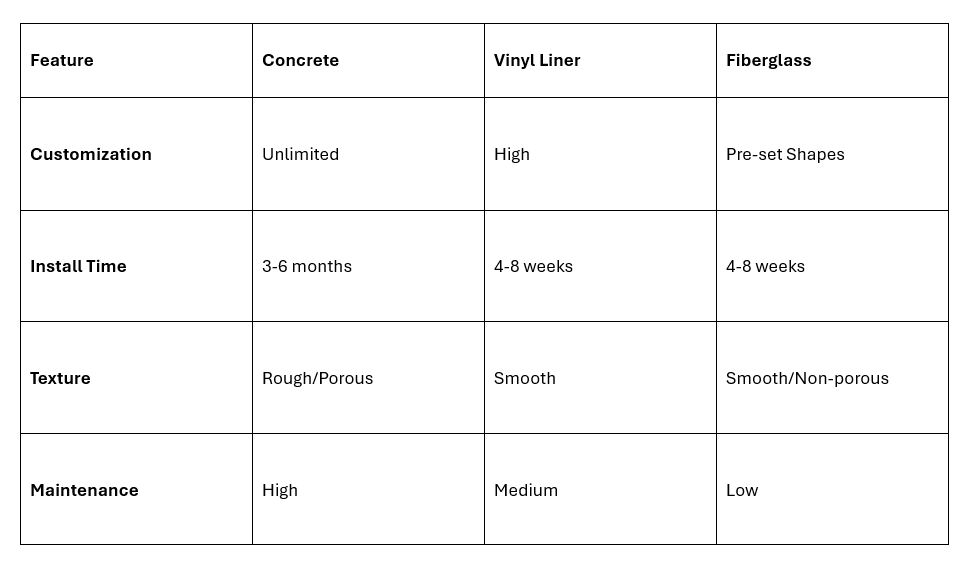
You’ve got three main options: concrete (gunite), vinyl liner, and fiberglass. All three can give you a beautiful pool. The real difference is what it’s actually like to live with that pool over the next 10–20 years.
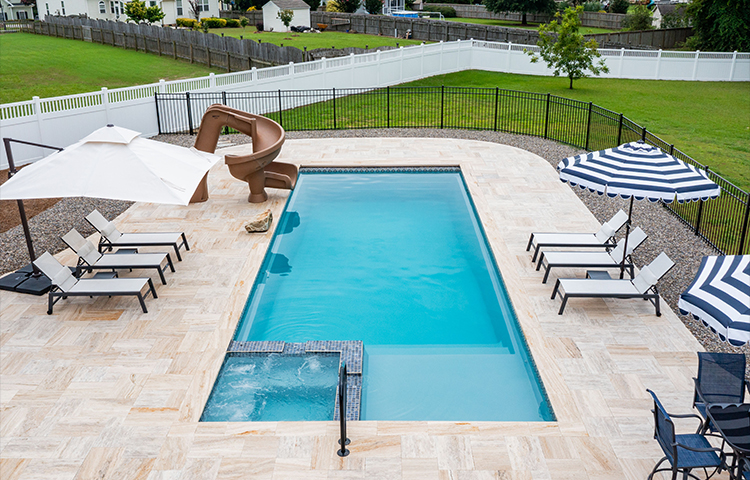
Fiberglass pools have come a long way, and honestly, they’re what most of our clients end up happiest with.
The surface is smooth and non porous, which makes a massive difference. It resists algae, feels great underfoot, and doesn’t require nearly as much maintenance. You’re not spending your weekends brushing walls or constantly dumping in chemicals.
Fiberglass pools are also built to handle our specific North Carolina conditions. They’re durable and flexible, so they hold up better with soil movement. And the installation timeline is much quicker, usually weeks instead of months.
A lot of people worry about design options, but most are surprised once they see what’s available. The largest pool we offer is 18 by 43, and because we work with multiple manufacturers, we can find something that fits your space, especially with features like tanning ledges or built in spas.

Paw-Approved:
Thinking of letting the Golden Retriever join the pool party? A vinyl liner can be punctured by a stray claw in seconds. Fiberglass is essentially "dog-proof", so you can let them jump in without the mini-heart attack.
Vinyl liner pools are usually the most budget friendly upfront, which is why they catch people’s attention. They’re smooth, comfortable, and offer some flexibility in design.
But they’re not built for the long haul in the same way. Liners typically need to be replaced every 5 to 9 years. They can be punctured by toys or anything sharp, and over time you’ll often see wrinkling or fading.
You have to be more careful with your water chemistry to protect the liner, and things like floating, where groundwater gets behind the liner, can make upkeep a headache. So while the initial price looks appealing, the long term cost and hassle can catch people off guard.
Concrete pools are what most people picture first because they’re fully customizable. If you can dream it, it can usually be built. They look high end, and the design options are basically endless.
But here’s the part most people don’t think about upfront. The surface is rough, not the most comfortable for feet, swimsuits, or kids playing all day. It’s also porous, which means it holds onto algae more easily and takes more chemicals and longer pump run times to keep things balanced.
Most concrete pools also need to be resurfaced every 10 to 15 years, and that’s a bigger expense than people expect. On top of that, they’re typically the most expensive option to build and take the longest to complete, often several months of construction in your backyard.
Every pool looks great when it’s brand new. The real difference shows up five years in.
A lot of the frustration we hear from homeowners isn’t about how the pool was built, it’s that no one really explained what ownership would feel like on a Tuesday afternoon when you just want to swim, not scrub.
A pool is a big investment, not just financially, but in how you spend your time at home. Done right, it becomes the center of your summer. Birthday parties, quiet evenings, kids learning to swim, it’s where memories happen.
The key is choosing a pool that actually supports that lifestyle.
Whether you’re dreaming big or just exploring ideas, our team is here to guide you. Reach out — we love to talk pools, plans, and sunny days.
Contact us